Using Vibration Plate After Hip Replacement
At a glance
- Ask your surgeon first. Many UK pathways review gentle activity at the 6 or 12 week check.
- Weeks 0 to 6: no vibration. Follow your physiotherapist's plan.
- Once cleared: 10 to 15 Hz, low amplitude (1 to 2 mm), 30 to 60 seconds, 3 to 4 times a week.
- Use a vertical or oscillating plate with handles. Avoid deep squats, twisting and single-leg standing.
- Stop and call your surgeon for sudden hip pain, clicking, new swelling, numbness or loss of balance.
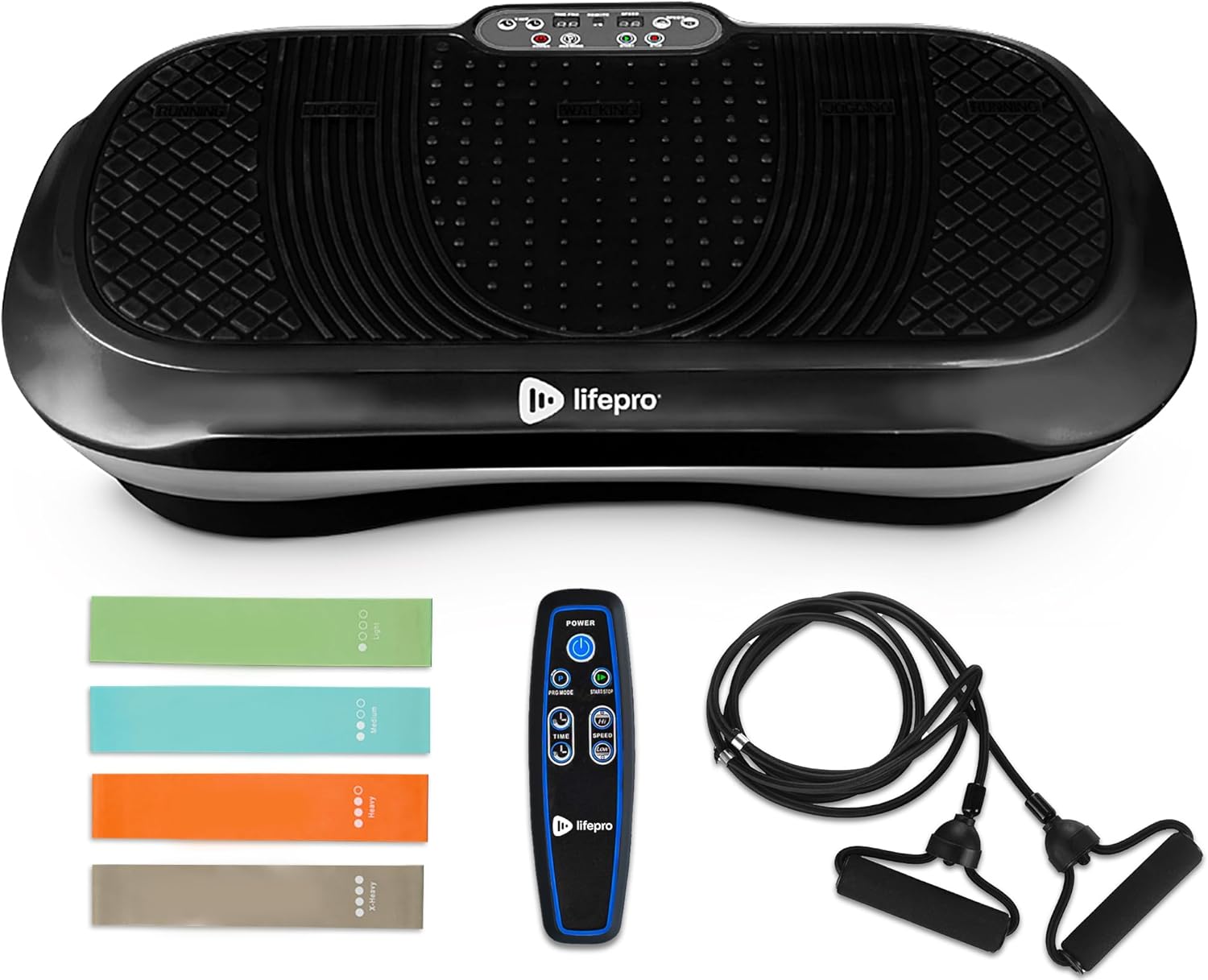
Pictured: LifePro Waver, an oscillating plate that LifePro states starts at 4 Hz.
In short: Ask your surgeon; many UK pathways review gentle activity at the 6 or 12 week check, provided your physiotherapy progress is on track. Start at low frequency (10-15 Hz), low amplitude, and short sessions. Progress only with surgeon approval. Avoid deep squats, twisting, and unsupported standing for the first six months.
Total hip replacement (also called total hip arthroplasty, or THA) is a routine but major procedure. Recovery happens in stages - and vibration plates fit into that recovery sensibly, but not before the bone-prosthesis interface has had time to settle.
This guide sets out a cautious timeline, starting settings to discuss with your physiotherapist, and the small list of movements you must avoid. None of it replaces your surgeon’s specific guidance - but if you are weeks 8 or 9 post-op and wondering whether to switch the plate back on, this is the general picture.
If you have not bought a plate yet, the two features that matter most for post-operative use are a low starting frequency and something stable to hold. Our guide to plates for seniors and older users covers the models with support handles, and our safety and contraindications guide covers who should not use one at all.
Ask your surgeon first. Every prosthesis differs, every recovery differs. The timeline below reflects the most common post-op pathway in the UK; your surgeon’s guidance overrides any general protocol.
Recovery timeline at a glance
| Phase | Time post-op | What's happening | Vibration plate use |
|---|---|---|---|
| Acute | Weeks 0-6 | Wound healing, joint protection, surgical-precaution movements only | Contraindicated |
| Early | Weeks 6-12 | Light activity, regaining mobility | Light WBV with surgeon clearance |
| Strengthening | 3-6 months | Bone remodelling, prosthesis settling | Structured programme allowed |
| Maintenance | 6-12 months | Advanced rehab, endurance, return to function | Regular use allowed |
Why vibration is contraindicated in the first six weeks
Hip replacement creates an interface between the prosthesis and surrounding bone. Cemented prostheses set within hours but full integration takes weeks. Uncemented (press-fit) prostheses rely on bone in-growth - a process that genuinely takes months.
Mechanical vibration during the first six weeks risks micro-displacement at this interface. During the acute phase, avoid vibration training, high-impact exercise and any resistance training that loads the hip beyond what your physiotherapist prescribes.
What you should do during weeks 0-6 is exactly what your physio prescribes - typically gentle range-of-motion exercises, walking with aids, and the surgical-precaution movements (no flexing the hip past 90 degrees, no crossing legs, no inward rotation of the operated leg).
Why vibration becomes useful from week 6 onward
Once your surgeon confirms wound healing is complete and physiotherapy has restored basic mobility, the picture changes. Several effects of low-intensity whole-body vibration become genuinely helpful:
- Reflexive muscle activation - the gluteal and quadriceps muscles often atrophy during the early acute phase. Brief vibration sessions trigger involuntary muscle contractions that begin reversing this without imposing high loads.
- Bone-loading stimulus - peri-prosthetic bone density tends to drop in the first year after THA. Low-amplitude vibration may provide a loading stimulus that supports bone retention; evidence comes from animal models and small clinical trials and is limited.
- Proprioception - your sense of where the operated leg is in space takes months to recover. Standing on a vibrating surface may help the recalibration, though this is not established for hip patients.
- Circulation - vibration increases blood flow in the legs while you are on the plate.
Surgeon clearance - what to discuss
Before your first session post-op, the conversation with your surgeon or specialist physiotherapist should cover:
- The type of prosthesis you have (cemented vs uncemented affects timing)
- Your healing progress (X-rays at the 6-week and 12-week reviews)
- Any comorbidities that affect bone (osteoporosis, long-term steroid use, rheumatoid arthritis)
- Your dislocation risk based on surgical approach (anterior, lateral, posterior - posterior carries higher early dislocation risk)
Many UK pathways review gentle activity at the 6 or 12 week check, so that is a natural time to raise it. If you haven’t been asked, ask. The conversation rarely takes more than two minutes.
Week-by-week protocol from weeks 6 onward
Once your surgeon has cleared you, the progression below is a cautious phased example for you to discuss with your physiotherapist. We have not run this protocol with patients ourselves. Your physiotherapist will individualise it, and their version overrides this one.
Weeks 6-8: introduction phase
- Frequency: 10-15 Hz
- Amplitude: Low (1-2 mm)
- Duration: 30 seconds to 1 minute
- Sessions per week: 3-4
- Position: Seated with feet on plate, OR standing with two-handed handle support
- Focus: Circulation, proprioception, basic muscle engagement
This phase is calibration. You’re learning the platform. The body learns that vibration is safe at this dose.
Weeks 9-12: adaptation phase
- Frequency: 15-18 Hz
- Amplitude: Low-medium (up to 2 mm)
- Duration: 1-2 minutes
- Position: Gentle standing, supported by handles
- Add: Simple isometric exercises - quad holds, supported mini-squats
Weeks 13-24: strengthening phase
- Frequency: 18-25 Hz
- Amplitude: Medium (up to 4 mm)
- Duration: 1-2 minutes
- Sessions per week: 4-5
- Add: Light dynamic movement - half-squats, step holds, hip extension drills
Weeks 25 onward: maintenance and endurance
- Frequency: 20-30 Hz
- Amplitude: Medium
- Duration: 2-3 minutes
- Add: Balance work, stability exercises, return to general training
For deeper detail on the Hz settings, see our frequency guide.
Safe parameters table
| Parameter | Initial (weeks 6-12) | Progression (post 3 months) |
|---|---|---|
| Frequency | 10-18 Hz | up to 30 Hz |
| Amplitude | 1-2 mm | up to 4 mm |
| Duration | 30-60 seconds | up to 3 minutes |
| Motion type | Vertical / oscillation only | Vertical / oscillation only |
No trial has set these figures for hip replacement patients, so treat them as questions for your surgeon or physiotherapist rather than a prescription. Check your own plate too: most home plates state 12 to 14.6 Hz at most and makers rarely publish amplitude, so the higher figures above will not apply to many of them.
Avoid lateral and triplane (3D) plates entirely for the first 12 months post-op. Vertical motion aligns with the natural loading axis of the hip; lateral motion does not.
Exercises to avoid versus exercises to favour
Avoid:
- Deep squats or lunges
- Hip twisting or rotation on the plate
- Single-leg standing on the plate
- Unsupported standing during weeks 6-12
- High-frequency pulses above 35 Hz
Favour:
- Seated calf raises with feet on the plate
- Supported standing with handles or a walker behind you
- Gentle weight-shifting between feet
- Mini squats (partial depth, knees behind toes)
- Static holds with even weight distribution
For the broader list of post-op contraindications, see our safety guidelines.
Stop and call your surgeon if you experience any of these
- Sudden hip pain or discomfort during or after a session
- Clicking, grinding, or instability sensation in the hip
- Increased swelling or redness near the surgical scar
- Numbness or tingling down the operated leg
- Loss of balance or unexplained dizziness
These are surgeon-call symptoms, not “wait and see” symptoms. Most resolve as something benign; some signal complications that need imaging.
Long-term benefits for prosthesis longevity
The possible benefits of sustained, low-intensity vibration training in the first year after surgery are modest and still being studied:
- Improved bone density in the peri-prosthetic region
- Reduced muscle atrophy in the gluteal and quadriceps groups
- Better balance and gait stability, which lowers fall risk (and by extension, prosthesis dislocation risk)
- Improved circulation to the joint capsule and surrounding tissue
None of these are dramatic single-month changes. They are slow gains across a year of consistent use. The protocol works because it is mild and repeated, not because any single session does much.
A plate suited to post-op use
For post-hip-replacement use, a plate with proper handle support, vertical/oscillation motion, and low-Hz starting points matters more than maximum power.
For the wider senior-friendly buying guide, see best vibration plates for seniors UK.
Related guides
- Vibration plate after knee replacement - adjacent joint replacement
- Vibration plate for back pain - common co-existing diagnosis
- Osteoporosis and vibration training - many hip replacement patients have bone density concerns
- Vibration plates and arthritis - the underlying cause of many hip replacements
Frequently asked questions
How soon after hip replacement can I use a vibration plate?
Ask your surgeon; many UK pathways review gentle activity at the 6 or 12 week check, provided your wound has healed and your physiotherapy progress is on track. Do not start before your own surgeon clears it.
Can vibration plates loosen a hip prosthesis?
We are not aware of published evidence that low-amplitude vibration (under 2 mm) at 10-15 Hz loosens modern cemented or uncemented prostheses. Higher amplitudes and frequencies above 25 Hz introduce theoretical concern; stick to the early-phase settings until your surgeon clears progression.
What settings are safe after hip replacement?
No trial has set safe settings for hip replacement patients, so agree them with your surgeon first. A cautious example to discuss is 10-15 Hz, low amplitude (1-2 mm), 30-60 seconds per session, 3-4 times per week, moving to 18-25 Hz only after 12 weeks and only with surgeon clearance.
Should I avoid certain exercises on the plate?
Yes. Avoid deep squats, lunges, hip twisting, single-leg standing, and unsupported standing for the first 6 months. Stick to seated calf raises, supported standing, mini squats, and static holds.
What if I had a partial (hemiarthroplasty) replacement?
The same general timeline applies - 6-12 weeks before introducing vibration, with surgeon approval. Hemiarthroplasty patients are often older with frailer bone, so the cautious end of the timeline is sensible.
This article is informational and is not a substitute for personal surgical or physiotherapy guidance. Every prosthesis and every recovery differs; your surgeon’s specific instructions override any general protocol. Reviewed by the Best Vibration Plates UK editorial team, 2 November 2026.
Once your surgeon clears progression, choose a low-amplitude oscillating model built for gentle rehab use. Our guide to the best vibration plates UK compares the safest options by frequency range, amplitude and warranty.