Can You Use a Vibration Plate on Your Period? Safe Settings
At a glance
- Yes for most healthy women. Skip the session if you feel faint, dizzy or in unusual pain.
- Start gently: 8 to 14 Hz, 10 to 15 minutes, 3 to 4 sessions a week, standing with soft knees.
- Pause for faintness on standing, severe cramps that painkillers do not ease, or very heavy bleeding. Speak to your GP.
- A plate that starts at a low speed lets you turn the intensity down on harder days.
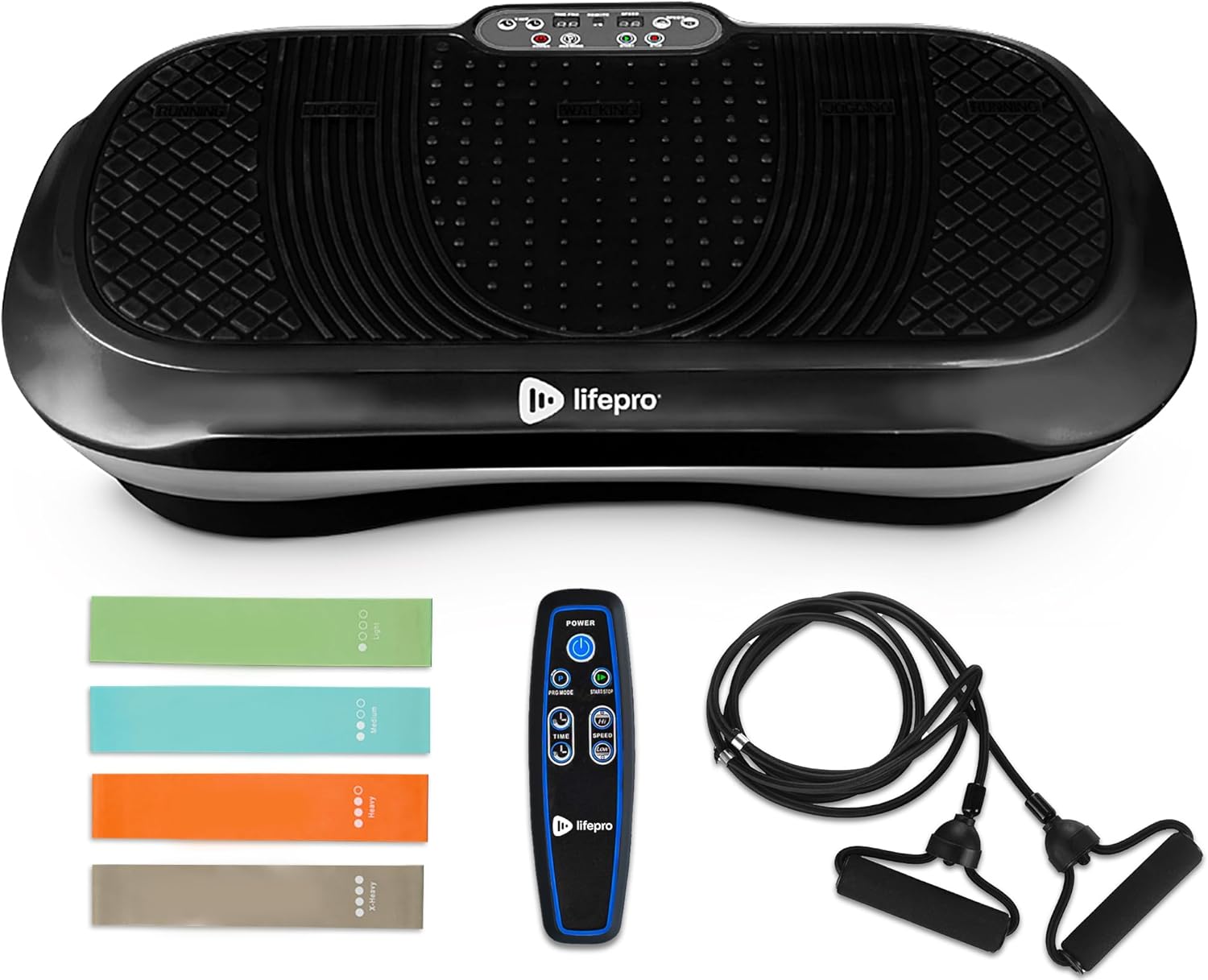
Pictured: LifePro Waver, an oscillating plate that LifePro states starts at 4 Hz.
In short: Yes-vibration plates are safe to use during menstruation for most healthy women. Used at moderate settings, they may help with cramps, mood, and energy. Skip the session only if you feel faint, dizzy, or in unusual pain.
If you ride a bike, swim, or jog during your period, a vibration plate is no different. The published evidence on exercise during menstruation is consistent: regular physical activity at moderate intensity does not harm the menstrual cycle in healthy women, and often eases symptoms. Vibration plates fit that pattern.
This guide covers what changes (if anything) when you use a plate on your period, gentler settings to start with, and the small list of situations where you should pause.
Are vibration plates safe during your period?
Yes-for most healthy women, with one important caveat. The mechanical oscillation of a vibration plate is no more disruptive to your cycle than a brisk walk or a Pilates class. There is no published evidence that whole-body vibration affects menstrual flow, hormone levels, or fertility in healthy women.
The caveat: if you live with a condition that already causes dizziness, fainting, or unstable blood pressure, hormonal shifts during menstruation can amplify those symptoms. On heavy-flow days where you feel light-headed, listen to your body and skip the session. The plate will be there tomorrow.
If you are still deciding which plate to buy, the feature that matters here is a genuinely low starting speed, so you can drop the intensity on the days you want something gentler. Our best vibration plates UK guide lists the starting frequency for each plate.
Will exercise on your period make you bleed more?
No. We are not aware of reliable evidence that moderate exercise makes periods heavier, and none of the sources on this page links vibration plates to heavier bleeding.
Some women do experience occasional breakthrough bleeding when they begin a new exercise routine. This is bleeding that occurs outside the expected period and usually settles within one or two cycles. It is not a reason to stop exercising-it is the body adapting to a new stimulus.
If you experience persistently heavy or painful bleeding, the cause is almost never exercise. Speak to your GP.
For the wider picture on who should and should not use a plate at all, read our vibration plate safety and contraindications guide before you buy.
Vibration plates and period cramps
Cramps (the medical term is dysmenorrhoea) are caused by uterine muscle contractions and the prostaglandins driving them. The two most useful things exercise does for cramps are:
- Improve pelvic blood flow. Gentle exercise raises circulation, which may ease cramps; this is a general exercise effect, not something shown for plates.
- Trigger endorphin release. Moderate exercise can trigger the body’s own pain-relieving endorphins.
Short, gentle sessions at low frequency (8-12 Hz) are a sensible starting point, although we are not aware of a study testing a plate for period cramps. Crucially, it’s the consistency that matters. A regular routine before your period is more effective than a one-off session during it.
Hormones, mood, and the case for not skipping
The hormonal shifts of menstruation can throw serotonin and dopamine off balance, contributing to the irritability, low mood, and anxiety that many women experience in the week before and during their period.
Exercise is linked to better mood, and the effect builds with regularity: a daily ten-minute habit before your period arrives is far more useful than trying to start one once symptoms are already present.
If you train consistently in the weeks leading up to your period, the hormonal swings tend to be less pronounced. Sleep improves, mood stabilises, and the cramps that survive arrive at a lower intensity.
When to skip a session
Pause the routine in these specific situations-not because vibration is dangerous, but because your body is asking for rest:
- Faintness or dizziness on standing, common in the first day or two of a heavy period, often related to mild iron drop or low blood pressure.
- Severe cramping that does not ease with usual painkillers-see your GP rather than push through.
- Very heavy bleeding that soaks through protection rapidly-this is a “speak to your GP” symptom regardless of exercise.
- A new diagnosis of an underlying condition (endometriosis, adenomyosis, fibroids), your gynaecologist or GP will give specific guidance.
For most women in most months, none of the above applies. The plate stays in the routine.
Should you stand or sit on the plate during your period?
Standing exercises are usually the better choice. Sedentary behaviour worsens nearly every symptom of menstruation: cramps, mood, energy, sleep. A standing vibration session activates more muscle groups, supports better posture, and produces the circulation benefit that helps with cramps.
Sitting on the plate is fine for short rest intervals, but the bulk of your session should be standing. If standing leaves you light-headed on heavy days, sit out the session entirely rather than substituting a long seated one.
Settings to start with
There is no single “menstrual setting.” A useful starting protocol:
- Frequency: 8-14 Hz (low to mid range-gentler oscillation)
- Duration: 10-15 minutes
- Sessions per week: 3-4 (skip if cramps make any of them feel like punishment)
- Position: standing, soft knees, neutral spine
- Plate type: oscillating plates are gentler than lateral; if you have a 4D plate, use the oscillation mode during your period. If you are still choosing a plate, see our compact plate research for a quiet, low-intensity option suited to cycle-friendly sessions
If you usually train harder than this, you can-listen to your body and reduce intensity if anything feels off. If you usually train lighter, this is a sensible week to keep doing exactly what you do.
For the full settings explainer, see our Hz frequency guide.
When you feel too tired
Many women find their first day of menstruation drains energy completely. The honest answer is: a short, low-intensity vibration session usually helps, even when the idea of starting it feels impossible. Ten minutes at 8 Hz is a sensible compromise between rest and movement.
Vibration plates are unusually well-suited to low-energy days because the platform does most of the work. You stand. The reflexive muscle activation happens whether you feel motivated or not. The endorphin and circulatory benefit follows.
If you genuinely cannot stand for ten minutes, rest is the right answer. Tomorrow.
How long should the session be?
For period use, shorter is usually better than longer.
Whole-body vibration delivers a meaningful dose in 10-15 minutes. Pushing past 20 minutes during your period adds fatigue without adding much benefit. The published trial protocols on vibration training rarely exceed 20-minute sessions for any goal-and the studies that work for menstrual symptom relief tend to use 10-15 minutes.
If you are training for weight loss or strength specifically, you can resume your usual session length once your period eases. During heavier days, treat it as an active-recovery week. For weekly cadence guidance, see how often to use a vibration plate.
Related guides
- Vibration plate and pregnancy, when use is and isn’t appropriate
- Vibration plate and blood pressure, for women whose blood pressure runs low and who feel faint on heavy-flow days
- Vibration plate safety guidelines, the full list of when not to use one
- Browse all health condition guides
A gentle plate suited to period use
For low-frequency oscillation use during menstruation, a plate that starts gently matters more than maximum power.
For the full ranked list of plates we recommend, see our best vibration plates UK guide.
Frequently asked questions
Can a vibration plate cause heavier periods?
There is no published evidence linking vibration plate use to increased menstrual bleeding. Some women report transient flow changes when starting any new exercise routine, but this typically settles within one or two cycles. If you notice persistently heavy bleeding, speak to your GP-exercise is rarely the cause.
Will a vibration plate delay my period?
Sustained intense exercise of any kind can affect cycle timing in some women, particularly when combined with low body fat or rapid weight loss. Moderate vibration plate use-10 to 20 minutes, three to four times a week-is unlikely to delay your period in healthy women.
Can a vibration plate help with period cramps?
It is not proven. We are not aware of a study testing a vibration plate for period cramps, so any benefit is a possibility rather than a result. If you try it, start at a low setting (around 8-12 Hz) for a short session, then adjust based on how you feel.
Should I avoid the plate on heavy flow days?
Most healthy women can use the plate throughout their cycle. Skip the session if you feel light-headed, faint, or unusually fatigued. Reduce intensity rather than pushing through discomfort-your body usually knows.
This article is informational and is not a substitute for personal medical advice. If you have a diagnosed gynaecological condition or your symptoms are severe, please speak to your GP. Reviewed by the Best Vibration Plates UK editorial team, 9 May 2026.