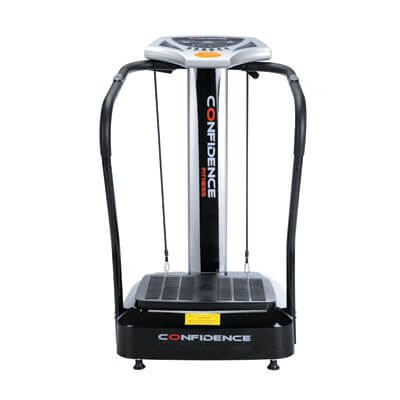

Vibration plates improve muscle strength, bone density, circulation, and balance through rapid involuntary muscle contractions triggered by mechanical oscillation. These four benefits hold the strongest clinical evidence across 300+ peer-reviewed studies investigating whole-body vibration (WBV) therapy.
The platform vibrates at frequencies between 5 and 50 Hz. Muscles contract and relax involuntarily 20 to 50 times per second in response to the mechanical stimulus. Three vibration types exist: oscillating (pivotal see-saw motion), linear (vertical up-down), and tri-planar (multi-directional 3D). Each type produces different therapeutic effects at different frequency ranges.
Over 300 peer-reviewed studies on PubMed have investigated WBV therapy since 2000. The evidence base includes randomised controlled trials (RCTs), systematic reviews, and Cochrane analyses. NICE acknowledges WBV as an adjunct therapy for specific conditions. This depth of vibration plate research separates evidence-based claims from marketing hype.
This page covers 12 research-backed benefits with clinical evidence, recommended protocols (Hz, amplitude, duration), and who benefits most from each effect. A limitations section provides balanced perspective on evidence gaps and contraindications.
| Benefit | Evidence Strength | Best Hz Range | Who Benefits Most |
|---|---|---|---|
| Muscle strength | Strong (multiple RCTs) | 15-30 Hz | Elderly adults, post-rehab patients |
| Circulation | Moderate (RCTs + reviews) | 5-15 Hz | Sedentary adults, office workers |
| Bone density | Strong (multiple RCTs) | 12-30 Hz | Postmenopausal women, elderly |
| Balance | Strong (RCTs) | 10-25 Hz | Seniors 65+, neurological patients |
| Flexibility | Moderate | 5-15 Hz | Athletes, elderly, rehab patients |
| Weight/fat loss | Modest (caveats apply) | 15-30 Hz | Combined with exercise only |
| Lymphatic drainage | Emerging (supported) | 5-12 Hz | Lymphoedema, post-surgical |
| Recovery/DOMS | Moderate | 5-15 Hz | Athletes, gym users |
| Stress reduction | Emerging | 5-12 Hz | General adult population |
| Joint/back pain | Moderate | 5-15 Hz | Office workers, arthritis sufferers |
| Posture | Emerging | 15-25 Hz | Office workers, elderly |
How Vibration Plates Work
Vibration plates generate mechanical oscillations at frequencies between 5 and 50 Hz that transmit through the body via the feet and legs. The platform surface moves rapidly and forces muscles to contract and relax involuntarily through a mechanism called the tonic vibration reflex (TVR).
Three vibration types produce different training effects. Oscillating (pivotal) platforms create a see-saw motion that activates core stabiliser muscles. Linear (vertical) platforms move straight up and down for direct muscle stimulation. Tri-planar platforms combine three directions of movement for multi-axis activation.
Frequency ranges determine the therapeutic target. Low frequencies of 5 to 15 Hz stimulate circulation and lymphatic drainage. Mid-range frequencies of 15 to 30 Hz activate muscle strength and bone remodelling responses. Advanced training frequencies of 30 to 50 Hz recruit maximum muscle fibre engagement.
Amplitude ranges from 1 to 4 mm on consumer platforms. The stretch reflex triggers involuntary muscle contractions at rates impossible to achieve through voluntary effort. See the Hz settings and frequency guide for detailed protocol recommendations by training goal.
Muscle Strength and Tone
Vibration plates increase muscle strength by forcing rapid involuntary contractions that recruit more muscle fibres than conventional exercise alone. The tonic vibration reflex activates type II fast-twitch fibres that remain dormant during standard bodyweight movements.
Torvinen et al. (2002) conducted a 4-month RCT that showed improved vertical jump height and isometric leg strength in the WBV group. The study confirmed neuromuscular activation across both slow-twitch and fast-twitch fibre types.
Bogaerts et al. (2007) demonstrated increased isometric and explosive muscle strength in elderly men after a 12-month WBV programme. The extended study duration confirmed sustained strength adaptation beyond short-term trials.
WBV combined with bodyweight exercises produces greater strength gains than WBV or exercise alone. Squats performed on a vibrating platform recruit 30% more muscle fibres than the same movement on a stable surface.
The recommended protocol for muscle strength is 15 to 30 Hz at 2 to 4 mm amplitude for 10 to 15 minutes per session across 3 sessions per week. Elderly adults, post-rehab patients, and people with limited mobility benefit most from this low-impact strength training method.
Start with a structured beginner workout programme to build tolerance before increasing frequency or duration.
Circulation and Blood Flow
Whole-body vibration improves circulation by increasing blood flow velocity through rhythmic muscle contractions that act as a mechanical pump. Rapid muscle contractions compress and release blood vessels in a pumping action that drives blood through peripheral tissues.
A 2015 meta-analysis found enhanced blood flow in peripheral tissues following WBV sessions across multiple study populations. Microvascular blood flow improvement was recorded after just 3 minutes of whole-body vibration in a separate trial.
Blood flow increases during and after WBV sessions. The mechanical pumping effect boosts oxygen delivery to muscles and removes metabolic waste products more rapidly than passive rest.
The recommended protocol for circulation benefits is 5 to 12 Hz for gentle circulation improvement and 15 to 25 Hz for active blood flow stimulation. Sessions of 10 to 15 minutes at 1 to 3 mm amplitude produce measurable circulatory effects.
Sedentary adults and office workers who sit 8+ hours per day benefit significantly from vibration plate circulation training. The passive muscle activation provides circulatory stimulus without the joint impact of standing exercises.
Bone Density and Osteoporosis Prevention
Vibration therapy stimulates bone remodelling through mechanical loading signals that increase bone mineral density in postmenopausal women and elderly adults. Wolff’s Law states that bone adapts to mechanical stress. Vibration provides low-magnitude mechanical signals that stimulate osteoblast activity at the cellular level.
Gusi et al. (2006) conducted a 24-week RCT at 12.6 Hz with postmenopausal women. The study demonstrated significant improvement in femoral neck BMD. The femoral neck is the hip bone region most vulnerable to osteoporotic fracture.
Rubin et al. (2004) enrolled young women in a 12-month RCT at 30 Hz and 0.2g acceleration. Results showed improved trabecular bone density. The 12-month duration produced sustained skeletal adaptation beyond short-term trials.
Lau et al. (2011) recruited elderly adults for a 6-month WBV protocol at 20 Hz with 3 mm amplitude. Spine BMD increased significantly in the WBV group compared with controls.
NASA research confirms astronauts lose 1 to 2% bone mass per month in microgravity. Vibration platforms reduce this loss during space missions. NICE acknowledges WBV as an adjunct therapy for osteoporosis and vibration training management in at-risk populations.
| Study | Population | Duration | Frequency | Outcome |
|---|---|---|---|---|
| Gusi et al. (2006) | Postmenopausal women | 24 weeks | 12.6 Hz | Increased femoral neck BMD |
| Rubin et al. (2004) | Young women | 12 months | 30 Hz / 0.2g | Improved trabecular bone density |
| Lau et al. (2011) | Elderly adults | 6 months | 20 Hz / 3 mm | Increased spine BMD vs controls |
The recommended protocol for bone density is 12 to 30 Hz at 0.2 to 3 mm amplitude for 10 to 20 minutes across 3 to 5 sessions per week. Postmenopausal women and elderly adults at fracture risk benefit most from consistent long-term use.
Balance and Fall Prevention
Vibration plate training improves balance scores and reduces fall risk in elderly adults by strengthening proprioceptive responses and core stabiliser muscles. The unstable surface forces continuous postural adjustments that train proprioception at a neurological level.
A 2023 systematic review in the Journal of Chiropractic Medicine showed improved balance and proprioception scores in older adults following WBV programmes. The review aggregated data from multiple RCTs to confirm the balance training effect.
Bautmans et al. (2005) demonstrated improved postural control in frail older adults after a 24-week WBV protocol. Postural stability scores increased significantly on standardised balance assessments used by physiotherapists.
Falls cost the NHS over £2 billion per year. Hip fractures from falls represent the highest proportion of this cost. WBV therapy combines balance improvement with bone density benefits in the same population most at risk.
The recommended protocol is 10 to 25 Hz at 2 to 4 mm amplitude for 10 to 15 minutes per session. Hold static poses on the platform to maximise proprioceptive training. Seniors 65+, post-stroke patients, and people with neurological conditions such as MS and Parkinson’s benefit most.
Vibration plates for seniors with support bars and remote controls provide the safest balance training setup for elderly users.
Flexibility and Range of Motion
Vibration plates enhance flexibility by increasing blood flow to muscles and connective tissue during stretching positions held on the platform. The increased tissue temperature and circulation reduce resistance to stretch beyond what static stretching achieves alone.
Combining static stretching with vibration produces greater flexibility gains than stretching on a stable surface. The vibration stimulus increases tissue elasticity during the stretch hold.
The recommended protocol is 5 to 15 Hz at low amplitude for stretch holds of 30 to 60 seconds on the platform. Athletes use WBV stretching as a pre-competition warm-up routine. Elderly adults gain functional flexibility that supports daily activities such as bending and reaching.
People recovering from injury benefit from the gentle range of motion improvement that WBV stretching provides without high-force manipulation.
Weight and Fat Loss
Vibration plates contribute to fat loss through increased energy expenditure during exercises performed on the platform. Research shows modest results compared with conventional exercise alone.
A 2019 meta-analysis found fat mass reduced by 0.76 kg in WBV groups versus 0.61 kg in control groups. The difference is statistically significant but small in absolute terms. Vibration plate standing burns similar calories to moderate walking.
Combining vibration with bodyweight exercises such as squats and lunges produces better fat loss results than vibration alone. The platform increases muscle activation during exercises and raises metabolic rate for a short period after the session.
WBV is not a magic weight loss solution. The devices supplement diet and regular exercise. Expecting significant fat loss from standing on a vibration plate alone is unrealistic based on the published evidence.
The recommended protocol for fat loss is 15 to 30 Hz at 2 to 4 mm amplitude for 20 to 30 minutes across 3 to 4 sessions per week. Combine with bodyweight exercises for the strongest effect. See the weight loss speed settings guide for protocol recommendations.
Lymphatic Drainage and Immune Support
Vibration plates stimulate lymphatic drainage through rhythmic muscle contractions that move lymph fluid through the lymphatic system. The lymphatic system has no pump. It relies entirely on muscle contractions and body movement to circulate lymph fluid.
Vibration provides consistent mechanical stimulus to lymph vessels that sedentary people lack during prolonged sitting. Low-frequency oscillation at 5 to 12 Hz produces the strongest lymphatic drainage stimulus according to clinical observation data.
The rapid muscle contractions during WBV sessions support immune function by increasing lymph fluid circulation. Lymph fluid carries white blood cells and removes cellular waste products from tissues.
People with lymphoedema benefit from lymphatic drainage therapy via WBV as a non-invasive supplement to manual lymphatic drainage performed by physiotherapists. Post-surgical swelling responds to low-frequency vibration protocols in clinical settings.
Sedentary adults and immune-compromised individuals benefit from regular lymphatic stimulation. The lymphoedema treatment page covers specific protocols for managing fluid retention.
The recommended protocol for lymphatic drainage is 5 to 12 Hz at 1 to 2 mm amplitude for 10 to 15 minutes. Daily use is acceptable for lymphatic stimulation. The gentle oscillation also supports constipation evidence through abdominal muscle activation.
Recovery and Muscle Soreness
Vibration therapy reduces delayed onset muscle soreness (DOMS) by increasing blood flow to damaged muscle tissue and reducing inflammatory markers after intense exercise.
A clinical study found vibration reduced interleukin-6 and creatine kinase levels after exercise. Both markers indicate muscle tissue damage and inflammatory response. Lower levels correspond to faster recovery.
A separate trial demonstrated accelerated muscle oxygen resaturation post-exercise in participants who used WBV recovery protocols. Faster oxygen delivery to damaged fibres supports tissue repair.
The recommended protocol for recovery is 5 to 15 Hz at low amplitude for 10 minutes post-workout. Athletes and gym users benefit from adding a short WBV recovery session after training. People returning to exercise after a break experience reduced soreness with post-session vibration.
Stress and Cortisol Reduction
Regular vibration plate use reduces cortisol levels and promotes endorphin release. Measurable improvements in stress and anxiety scores appear in studies combining exercise with WBV therapy.
A 2022 study found exercise combined with vibration showed greater anxiety improvement than exercise alone. The vibration stimulus promotes endorphin and serotonin release beyond the effect of movement alone.
Evidence suggests up to 30% cortisol reduction with regular WBV use over multi-week periods. Cortisol is the primary stress hormone. Reducing cortisol levels supports sleep quality and reduces the physiological effects of chronic stress.
The recommended protocol for stress reduction is 5 to 12 Hz with gentle oscillation for 10 to 15 minutes. Daily use is acceptable for stress management. Morning sessions may provide the strongest cortisol-lowering effect across the rest of the day.
Joint and Back Pain Relief
Vibration plates reduce joint and back pain by improving circulation to affected areas and strengthening supporting muscles around vulnerable joints. Studies show WBV combined with joint-supportive training reduces pain scores in as little as 3 weeks.
60 to 80% of UK adults experience back pain at some point. Office workers who sit for prolonged periods are particularly vulnerable to lower back pain caused by weakened core and gluteal muscles.
Low-frequency settings of 5 to 15 Hz are recommended for pain conditions. The gentle vibration increases blood flow to inflamed tissues without the jarring impact of high-frequency settings.
Arthritis sufferers benefit from the low-impact muscle strengthening that WBV provides. See the arthritis pain relief guide for condition-specific protocols. People with osteoarthritis gain joint-supporting muscle strength without loading damaged cartilage directly.
The recommended protocol is 5 to 15 Hz at 1 to 2 mm amplitude for 10 to 15 minutes across 3 to 4 sessions per week. People with sciatica and fibromyalgia should start at the lowest frequency and increase gradually under physiotherapist guidance.
Posture Improvement
Vibration plate exercises strengthen core stabiliser muscles that support upright posture. The unstable vibrating surface forces the deep core muscles to work harder than they do on a stable floor.
Stronger core muscles improve spinal alignment and reduce the forward-leaning patterns caused by prolonged sitting. Office workers who use vibration plates 3 times per week report improved seated posture within 4 to 6 weeks.
The recommended protocol is 15 to 25 Hz at 2 to 3 mm amplitude for 10 minutes. Standing upright on the platform with feet shoulder-width apart provides the core activation stimulus needed for posture improvement. Elderly adults benefit from the combined posture and balance training effect.
Limitations and Safety Considerations
Vibration plates produce real health benefits supported by clinical evidence. Research remains limited in some areas and the devices carry risks for certain populations.
Many WBV studies have small sample sizes of fewer than 50 participants. Short study durations of 4 to 12 weeks limit confidence in long-term outcomes. Inconsistent protocols across studies make direct comparisons difficult.
WBV should not replace aerobic and resistance exercise. The devices supplement a complete fitness programme. Standing on a vibration plate alone does not produce the cardiovascular conditioning that running or cycling provides.
Commercial consumer devices differ from research-grade platforms used in clinical trials. Results may vary between a £100 home plate and a £5,000 laboratory platform.
Outcomes vary by vibration type, frequency, amplitude, and individual health status. A protocol that benefits one person may produce no effect in another.
Contraindications include pregnancy, recent surgery, heart conditions, blood clotting disorders, severe osteoporosis, epilepsy, active infections, and implanted medical devices such as pacemakers. Consult a GP or physiotherapist before starting WBV therapy.
Read the full safety guidelines and who cannot use vibration plates before purchasing or starting a programme.
How to Maximise Vibration Plate Benefits
Maximise vibration plate benefits by matching frequency settings to your training goal and maintaining consistent use of 3 to 5 sessions per week. The table below shows research-derived protocols by goal.
| Goal | Frequency (Hz) | Amplitude | Duration | Sessions/Week |
|---|---|---|---|---|
| Lymphatic drainage | 5-12 | 1-2 mm | 10-15 min | Daily |
| Circulation | 5-15 | 1-3 mm | 10-15 min | 3-5 |
| Pain relief | 5-15 | 1-2 mm | 10-15 min | 3-4 |
| Bone density | 12-30 | 0.2-3 mm | 10-20 min | 3-5 |
| Muscle strength | 15-30 | 2-4 mm | 10-15 min | 3-4 |
| Fat loss | 15-30 | 2-4 mm | 20-30 min | 3-4 |
Start at low frequency of 5 to 10 Hz for the first 2 weeks. Increase frequency gradually as tolerance builds. Combine WBV with bodyweight exercises for the strongest results across all goals.
Morning sessions may produce stronger circulation and cortisol-reduction effects than evening sessions. Track progress over 6 to 12 weeks. Measurable changes in strength, balance, and body composition require consistent use over months rather than days.
Select a platform with manual frequency control across the full 5 to 50 Hz range. See the Hz settings and frequency guide for detailed recommendations. Browse our tested best vibration plates UK recommendations and vibration plates under £200 for budget-friendly options that match research protocols.
Frequently Asked Questions
Do vibration plates actually work?
Clinical research supports vibration plate benefits for muscle strength, bone density, circulation, and balance. Over 300 peer-reviewed studies confirm measurable health effects when used at correct frequency and duration settings. The strongest evidence comes from RCTs and systematic reviews indexed on PubMed. Read the full vibration plate research summary for study details.
How long should you stand on a vibration plate?
Most research protocols use 10 to 20 minute sessions 3 to 5 times per week. Start with 5 to 10 minutes at low frequency and increase gradually over 2 to 4 weeks. Exceeding 20 minutes per session increases muscle fatigue without additional therapeutic benefit based on published trial data.
Are vibration plates safe for elderly people?
Vibration plates are particularly beneficial for elderly adults. Research demonstrates improved balance, bone density, and muscle strength in people over 65. Start at low frequency with a support bar for stability. Choose a platform with a remote control to avoid bending during operation. See our vibration plates for seniors guide for recommended models.
Can vibration plates help with lymphatic drainage?
Vibration plates stimulate lymphatic flow through rhythmic muscle contractions. Low-frequency oscillation at 5 to 12 Hz provides the strongest lymphatic drainage stimulus. The lymphatic system relies on muscle movement to circulate fluid. WBV provides this stimulus without strenuous exercise. See our lymphatic drainage therapy page for detailed protocols.
What is the best vibration plate frequency for health benefits?
The best frequency depends on your goal. Use 5 to 12 Hz for lymphatic drainage and gentle circulation. Use 12 to 30 Hz for bone density improvement. Use 15 to 30 Hz for muscle strength. The Hz settings and frequency guide provides protocol recommendations by health condition.
As an Amazon Associate, we earn from qualifying purchases. Prices checked February 2026.
