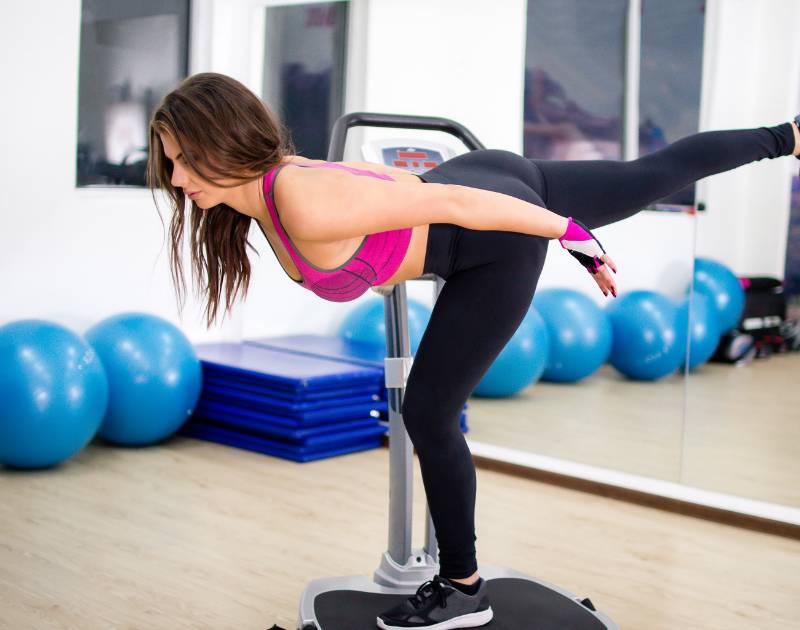

Set your vibration plate between 15 and 40 Hz for most training goals. Frequency — measured in Hertz (Hz) — controls how many times the platform oscillates per second and determines which muscles and physiological systems respond. The full range on consumer plates spans 5 Hz for gentle relaxation up to 50 Hz for clinical-grade neuromuscular stimulation.
Each Hz band produces a different training effect. Low frequencies (5-15 Hz) stimulate lymphatic drainage and circulation. Mid-range frequencies (20-30 Hz) activate motor units for weight loss and functional strength. High frequencies (30-40 Hz) recruit fast-twitch muscle fibres for power and athletic performance.
This guide covers goal-specific Hz protocols backed by published research from 2005 through to 2025. Every recommendation includes amplitude settings and session durations drawn from clinical trials and systematic reviews. Use the quick-reference chart below to choose your starting frequency and read the goal-specific sections for full protocols. Detailed evidence for each recommendation is available on our vibration plate research page. The full range of vibration plate benefits depends on selecting the correct Hz for your objective.
What Does Hz Mean on a Vibration Plate?
Hz stands for Hertz and measures oscillations per second. A vibration plate set to 10 Hz completes 10 full up-and-down cycles every second. A plate set to 30 Hz completes 30 cycles per second — producing 1,800 muscle contractions per minute.
Higher Hz settings produce more rapid oscillation and greater neuromuscular demand. Lower Hz settings produce gentler stimulation suited to circulation and recovery work. The relationship is linear: doubling the Hz doubles the number of contractions per second.
Consumer vibration plates operate between 5 Hz and 50 Hz. Published research uses 15-45 Hz for most therapeutic and training outcomes. Frequencies below 5 Hz produce insufficient mechanical stimulus and frequencies above 50 Hz deliver no additional benefit (PMC11396361 — 2024 clinical utility review covering 5-50 Hz dosing).
Quick Reference: Vibration Plate Frequency Chart
| Hz Range | Physiological Effect | Best For | Population | Session Duration | Amplitude |
|---|---|---|---|---|---|
| 5-10 Hz | Body resonance zone; gentle circulation stimulus | Massage and relaxation and post-workout recovery | Beginners and sensitive users and elderly | 10-15 minutes | Low (1-2 mm) |
| 10-15 Hz | Moderate muscle recruitment; muscular relaxation | Balance training and joint mobility and [vibration plate for constipation](/vibration-plate-constipation/) (12 Hz) | Older adults and rehabilitation patients | 10-15 minutes | Low-medium (1-3 mm) |
| 15-20 Hz | Reflexive contractions begin; coordination improves | Flexibility and functional movement and bone density | Beginners transitioning to intermediate | 12-18 minutes | Medium (2-3 mm) |
| 20-30 Hz | High motor unit activation; peak caloric expenditure | Weight loss and muscle strength and endurance | General fitness population | 15-20 minutes | Medium (2-4 mm) |
| 25-35 Hz | Peak quadriceps activation; osteoblast stimulation | Bone density and athletic performance and toning | Active adults and postmenopausal women | 10-20 minutes | Low-medium (1-3 mm) |
| 30-40 Hz | Fast-twitch fibre recruitment; maximum neuromuscular stimulation | Power development and advanced strength | Athletes and trained users | 10-15 minutes | Medium-high (2-5 mm) |
| 40-50 Hz | Intense stimulation; rapid oscillation | Advanced therapeutic and professional clinical use | Professional and clinical settings only | 5-10 minutes | Low (1-2 mm) |
Frequencies above 50 Hz produce diminishing returns. Transmitted vibration power declines by a factor of 10 to 1,000 beyond this threshold. Avoid settings above 50 Hz on any consumer vibration plate.
Hz Settings by Goal
Weight Loss (20-30 Hz)
20-30 Hz is the optimal frequency range for weight loss on a vibration plate. This band produces peak motor unit activation and the highest caloric expenditure per session. A meta-analysis (PMC6944803) confirmed that whole-body vibration (WBV) at 20-30 Hz reduces total fat mass across multiple populations.
Set your plate to 25 Hz as a starting point for vibration plate weight loss. Use 2-4 mm amplitude to increase muscle loading without excessive joint stress. Progress to 30 Hz after two weeks if 25 Hz feels comfortable and muscle soreness remains manageable.
Session duration should be 15-20 minutes at 3 sessions per week. Stand with knees slightly bent to recruit the large muscle groups of the thighs and glutes. Add bodyweight squats and lunges on the plate to increase energy expenditure further.
The mechanism works through motor unit recruitment. At 20-30 Hz both slow-twitch and fast-twitch muscle fibres activate simultaneously. This combined recruitment increases metabolic rate during and after each session — producing a measurable reduction in body fat over 8-12 weeks of consistent use.
Muscle Strength and Power (30-40 Hz)
30-40 Hz produces the greatest gains in muscle strength and power output. Fast-twitch muscle fibres (Type IIb and IIx) activate fully at this frequency range. A systematic review (PMC8226869) found that 30-40 Hz WBV is most effective for improving muscle strength in older adults.
Set your plate to 35 Hz with 2-5 mm amplitude for strength-focused sessions. Use 30-60 second holds per exercise and 10-15 minutes total session time. Perform isometric squats and calf raises to maximise lower-body muscle contraction.
Age determines the ideal frequency within this range. A clinical trial (PMC5628593) showed that 40 Hz produced greater knee extensor strength than 20 Hz in young healthy volunteers. A separate study (PMC8625607) found that 20 Hz produces greater muscle contraction in adults over 50 than 40 Hz does.
A 2025 PLOS ONE meta-analysis confirmed that frequencies above 30 Hz provide greater strength improvements in healthy women. A Nature 2025 study demonstrated that WBV is comparable to resistance training for reversing sarcopenia in older adults — supporting 30-40 Hz as the primary strength-building frequency band.
Bone Density and Osteoporosis (25-35 Hz)
25-35 Hz is the recommended frequency range for improving bone mineral density (BMD). Research recommends high frequency combined with low magnitude for osteoblast stimulation. A clinical trial (PMC4440196) demonstrated that 30 Hz WBV for 6 months produced a 4.3% increase in BMD at the lumbar spine in postmenopausal women.
Set your plate to 30 Hz with low amplitude (1-2 mm) for bone density protocols. Low amplitude is critical — a meta-analysis (PubMed 36282343) found that high frequency (~30 Hz) combined with low magnitude (~0.3g) produces the best BMD outcomes. High amplitude does not improve bone density results and may increase joint stress.
Session frequency matters more than session duration for bone outcomes. Use 15-20 minute sessions at 3-5 times per week for a minimum of 6 months. The meta-analysis identified high cumulative dose (~7,000 total minutes) as the strongest predictor of lumbar spine BMD improvement.
Consult your GP before starting a bone density programme if you have diagnosed osteoporosis. Read our do vibration plates work page for the full evidence base on WBV and bone health outcomes.
Lymphatic Drainage and Circulation (10-20 Hz)
10-20 Hz stimulates lymphatic drainage and improves circulation without causing muscle fatigue. Low-frequency oscillation produces rhythmic compression and decompression of lymphatic vessels. This gentle mechanical action moves lymph fluid through the body and reduces swelling in the lower limbs.
Set your plate to 12-15 Hz with low amplitude (1-2 mm) for lymphatic work. Stand or sit on the plate for 1-3 minutes per position. Move through multiple positions — standing and seated and lying with feet on the platform — to target different lymphatic zones.
Total session time should be 10-15 minutes at 3-4 sessions per week. Research shows that a 3-minute WBV session significantly enhances blood flow to muscles at these low frequencies. The mechanism works through gentle mechanical pumping rather than muscle contraction — making 10-20 Hz suitable for people who cannot tolerate vigorous exercise.
Balance and Mobility (15-25 Hz)
15-25 Hz improves balance and mobility through proprioceptive challenge. Bautmans et al. (2005) demonstrated that WBV at 15-25 Hz improved balance scores in elderly participants. A 2024 network meta-analysis (ScienceDirect Dec 2024) found that medium-frequency WBV (20-30 Hz) is best for static balance and high-frequency WBV (30-40 Hz) is best for dynamic balance and strength.
Set your plate to 20 Hz for balance training in adults over 50. Use low amplitude (1-2 mm) and progress to 2-4 mm over 8-12 weeks. Stand with a slight knee bend and hold the position for 30-60 seconds per set.
Session duration should be 10-15 minutes at 3 times per week. The proprioceptive challenge at 15-25 Hz activates stabiliser muscles and improves neuromuscular control without excessive fatigue. Vibration plates for seniors with handrail supports provide additional safety during balance training at these frequencies.
Relaxation and Recovery (5-15 Hz)
5-15 Hz produces muscular relaxation and gentle circulation without contractile fatigue. Frequencies below 15 Hz match the natural resonance zone of the body and produce slow rhythmic displacement. This range is suited to post-workout recovery and massage-style sessions.
Set your plate to 8-10 Hz with low amplitude (1-2 mm) for recovery sessions. Use 5-10 minutes after strength training or cardiovascular exercise. The slow oscillations stimulate blood flow to fatigued muscles and reduce delayed-onset muscle soreness.
Relaxation protocols do not require specific body positions. Stand with soft knees or sit with feet resting on the platform. This frequency range produces minimal physical demand and is appropriate for daily use without risk of overtraining or neuromuscular fatigue.
How Frequency and Amplitude Work Together
Frequency and amplitude combine to determine G-force — the acceleration intensity delivered to the body. The simplified formula is: G = (2 x pi x f)squared x A / 9.81. Frequency (f) is measured in Hz and amplitude (A) is measured in metres.
The critical principle is this: doubling frequency quadruples G-force at the same amplitude. A vibration plate set to 20 Hz at 2 mm amplitude produces approximately 3.2G. The same plate at 40 Hz and 2 mm amplitude produces approximately 12.8G — four times the intensity from doubling the Hz alone.
Amplitude measures the vertical distance the platform travels during each oscillation cycle. Consumer plates typically offer 1-5 mm amplitude. Higher amplitude increases the displacement distance and adds to the total G-force load on muscles and joints.
| Frequency (Hz) | Amplitude 1 mm | Amplitude 2 mm | Amplitude 4 mm |
|---|---|---|---|
| 15 Hz | 0.9G | 1.8G | 3.6G |
| 30 Hz | 3.6G | 7.2G | 14.4G |
| 45 Hz | 8.1G | 16.2G | 32.4G |
High Hz combined with high amplitude can produce G-force levels that exceed safe limits for untrained users. Beginners should use low Hz (10-15) at low amplitude (1-2 mm) to keep G-force below 2G. Advanced users pursuing strength goals can increase Hz first and then raise amplitude — Hz progression produces more targeted neuromuscular stimulus than amplitude increases alone.
Safety demands attention to both variables. A plate set to 45 Hz at 4 mm amplitude generates 32.4G — far beyond safe consumer training levels. Keep amplitude low when using frequencies above 30 Hz. Consult our safety guidelines for full G-force recommendations by fitness level and age.
Linear vs Pivotal vs 3D: How Hz Ranges Differ by Platform Type
Platform type determines how vibration is delivered to the body and which Hz range is effective. Linear plates move straight up and down. Pivotal plates tilt side-to-side like a seesaw.
3D plates combine vertical and horizontal movement.
| Parameter | Linear (Vertical) | Pivotal (Oscillating) | 3D / Tri-Planar |
|---|---|---|---|
| Typical Hz Range | 15-50 Hz | 5-30 Hz | 5-40 Hz |
| Amplitude | 1-3 mm (low) | 5-10 mm (high) | 1-10 mm (variable) |
| Muscle Activation Pattern | Bilateral (both legs simultaneously) | Alternating (left-right) | Multi-directional |
| Best For | Muscle strength and power and bone density | Balance and lymphatic drainage and relaxation | General fitness and versatility |
| G-Force at 30 Hz | High (low amplitude offsets) | Moderate (high amplitude at lower Hz) | Variable |
Pivotal plates use lower Hz settings with higher amplitude to produce comparable stimulation to linear plates at higher Hz with lower amplitude. A pivotal plate at 15 Hz may feel similar in intensity to a linear plate at 25 Hz. Direct Hz conversion between platform types is not possible.
Most bone density studies used pivotal platforms at 12-30 Hz. Most muscle strength studies used linear platforms at 25-40 Hz. Check your platform type before applying any Hz recommendation from published research.
Using a linear platform recommendation on a pivotal plate — or the reverse — may produce insufficient or excessive stimulation. Our best vibration plates UK guide identifies the platform type for each recommended model.
Age-Specific Frequency Recommendations
Age affects optimal vibration plate frequency. Younger adults tolerate and benefit from higher Hz settings. Older adults achieve better outcomes at moderate and lower frequencies due to differences in neuromuscular response and recovery capacity.
Under 30: 25-40 Hz. Younger muscles and connective tissues respond well to high-frequency stimulation. Use 30-40 Hz for strength and power goals.
A study (PMC5628593) confirmed that 40 Hz produced greater knee extensor strength than 20 Hz in young healthy volunteers.
30-50 years: 20-35 Hz. This moderate range stimulates both slow-twitch and fast-twitch fibres. Use 25-30 Hz for general fitness and 30-35 Hz for strength-specific goals.
50-65 years: 15-30 Hz. Bone density protocols (25-30 Hz at low amplitude) become a priority. A study (PMC8625607) demonstrated that 20 Hz WBV produces greater muscle contraction in adults over 50 than 40 Hz — lower frequencies are more effective for this age group.
Over 65: 10-25 Hz. Balance and fall prevention take priority. Use 15-20 Hz for balance training and 20-25 Hz for gentle strength maintenance.
Vibration plates for seniors should include handrail supports and start at the lowest available Hz setting. Bautmans et al. (2005) showed balance improvements at 15-25 Hz in elderly populations.
Beginner Frequency Programme: Weeks 1-6
Begin at 10 Hz and progress to 30 Hz over six weeks. This programme builds neuromuscular adaptation gradually and reduces the risk of excessive muscle soreness or joint discomfort. Each week increases Hz by 3-5 Hz as your body adapts to whole-body vibration.
| Week | Frequency (Hz) | Duration | Sessions Per Week | Focus |
|---|---|---|---|---|
| Week 1 | 10 Hz | 8 minutes | 3 | Platform familiarisation and body positioning |
| Week 2 | 12-15 Hz | 10 minutes | 3 | Balance and circulation |
| Week 3 | 15-18 Hz | 12 minutes | 3-4 | Light muscle activation |
| Week 4 | 18-22 Hz | 15 minutes | 3-4 | Moderate muscle contraction |
| Week 5 | 22-25 Hz | 15-18 minutes | 4 | Functional strength and endurance |
| Week 6 | 25-30 Hz | 15-20 minutes | 4 | Goal-specific training begins |
Adjust the pace of progression based on individual response. Reduce by 3-5 Hz if muscle soreness persists beyond 48 hours after a session. Increase session frequency before increasing Hz if you want a gentler progression path.
After Week 6 choose your goal-specific Hz range from the sections above and continue at that frequency. Browse our vibration plate exercises page for movement programmes that match each Hz band. The 2024 clinical utility review (PMC11396361) recommends 4-6 weeks of progressive adaptation before using frequencies above 25 Hz for any therapeutic or training goal.
Safe Frequency Limits and What to Avoid
Avoid frequencies above 50 Hz on consumer vibration plates. Published research shows no additional muscle activation above 50 Hz and transmitted vibration power drops by a factor of 10 to 1,000 beyond this threshold. Frequencies above 50 Hz increase discomfort without producing therapeutic benefit.
The head resonates at 20-30 Hz. Bend your knees slightly during all standing exercises to dampen vibration transmission to the head and neck. Locked knees at 20-30 Hz can cause headaches and dizziness.
The spine resonates at 10-12 Hz. Avoid sustained standing at 10-12 Hz if you have back pain. Use 5-8 Hz for gentle stimulation or progress directly to 15 Hz and above to bypass spinal resonance.
Certain conditions contraindicate WBV at any frequency. Pregnancy and acute deep vein thrombosis and pacemakers and recent surgery (within 6 months) are absolute contraindications. Severe osteoporosis requires GP clearance before beginning any vibration plate programme.
Our full safety guidelines page covers contraindications and warning signs in detail.
Stop immediately if you experience numbness or tingling or sharp pain during a session. Reduce Hz by 5-10 and shorten session duration. Persistent symptoms require medical assessment before resuming vibration plate use.
Frequently Asked Questions
Choosing a Vibration Plate?
Our physiotherapist-reviewed guide compares the top models by Hz range, vibration type, and value for money. See which plate suits your goals.
What frequency should I use on my vibration plate?
20-30 Hz suits most general fitness goals including weight loss and functional strength. 30-40 Hz is best for muscle power and advanced strength training. 25-35 Hz is recommended for bone density protocols.
10-20 Hz stimulates lymphatic drainage and circulation. Beginners should start at 10-15 Hz and progress to their goal-specific range over 4-6 weeks.
Is 30 Hz or 50 Hz better for vibration plates?
30 Hz is better than 50 Hz for most training and therapeutic goals. Research shows peak muscle activation occurs at 28-35 Hz with diminishing returns above 50 Hz.
50 Hz suits only advanced users or clinical settings under professional supervision. Choose 30 Hz as your default for strength and bone density work.
What Hz is best for weight loss on a vibration plate?
20-30 Hz produces the highest caloric expenditure and motor unit activation for weight loss. A meta-analysis (PMC6944803) confirmed that WBV at 20-30 Hz reduces total fat mass. Set your plate to 25 Hz at 2-4 mm amplitude for 15-20 minute sessions three times per week.
What is the best frequency for bone density vibration?
25-35 Hz at low amplitude (~0.3g) is the evidence-based frequency for bone mineral density improvement. A trial (PMC4440196) showed a 4.3% BMD increase at the lumbar spine after 6 months of 30 Hz WBV in postmenopausal women. Use 15-20 minute sessions at 3-5 times per week for a minimum of 6 months.
Is higher Hz always better on a vibration plate?
Higher Hz is not always better. Adults over 50 achieve greater muscle contraction at 20 Hz than at 40 Hz (PMC8625607). Young adults gain more knee extensor strength at 40 Hz than at 20 Hz (PMC5628593).
The optimal frequency depends on age and fitness level and training goal — not simply the highest available setting.
What Hz is best for lymphatic drainage?
10-20 Hz is the recommended range for lymphatic drainage and circulation. Low-frequency oscillation produces gentle compression of lymphatic vessels without contractile muscle fatigue. Set your plate to 12-15 Hz at 1-2 mm amplitude and use 1-3 minutes per body position for a total session of 10-15 minutes.
Can vibration plates be harmful?
Vibration plates can cause harm if used above 50 Hz or by people with contraindicated conditions. Pregnancy and acute DVT and pacemakers and recent surgery are absolute contraindications. Frequencies above 50 Hz deliver no additional benefit and increase adverse effect risk.
Consult your GP before starting any vibration plate programme if you have a medical condition. Full detail is available on our safety guidelines page.
